
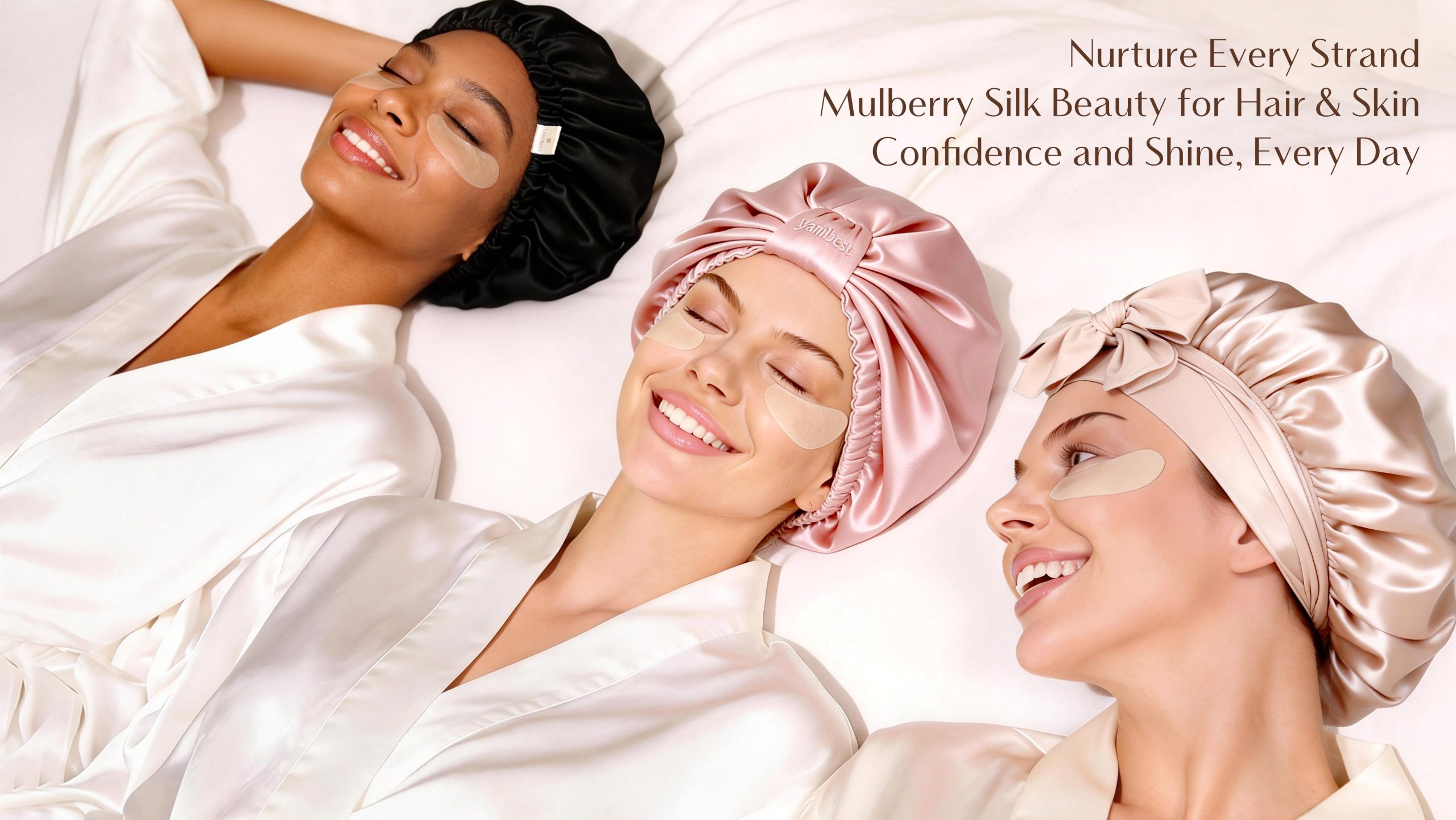
Opening: a quiet hypothesis about nightly wearables
Picture nights where your hair greets morning without frizz, your skin retains moisture, and your sleep gear feels like a soft interface between you and restorative hours—this is the practical speculation I’m mapping. Start small: swap cotton for silk, add a silk sleep mask, and you’ll notice less tug, fewer split ends, and cooler contact against the face. I say this from repeated bedside trials and deliberate habit shifts; the change is immediate and repeatable.

Why silk changes the equation
Silk reduces friction. That simple physical fact turns into measurable benefits for hair cuticles and delicate facial skin overnight. Mulberry silk with a momme weight around 19–22 feels dense enough to resist pilling yet light enough to breathe. Unlike cotton, silk doesn’t wick moisture away from hair and skin; it keeps hydration where you want it, preventing morning brittleness. Useable specifics: look for long-filament silk, double-stitched seams, and dye-process transparency—labels that tell you what’s inside.
What a futurist watches for: pitfalls to avoid
Cheap satin can masquerade as silk; it slips but doesn’t conserve moisture and often sheds fibers. Washing mistakes ruin the benefits: hot water, harsh detergents, and tumble drying distort fibers and lower momme feel. Tight seams and poorly lined zippers create pressure points that crease hair and skin; low-quality eye masks can transfer dyes or compress eyelids. Pick breathable construction, avoid heavy fragrances in detergents, and don’t assume a glossy surface equals real silk.
Alternatives, briefly scored
Satin: affordable, smooth, but often synthetic—short-term shine, long-term static. Bamboo-derived viscose: breathable and eco-angled, but its weave varies widely; some fabrics pill fast. High-thread-count cotton: soft and durable, but it still grabs hair and drinks moisture. If you care primarily about moisture retention and minimal friction, mulberry silk remains the most consistent performer.
Hands-on testing and an industry touchstone
I’ve run comparative nights across dozens of fabrics, noting tangles per sleep session and morning hydration. At a recent sleep-tech showcase in Las Vegas I observed prototypes aiming to integrate light-blocking pads with breathable silk linings; those demos reinforced that design details—padding distribution, seam placement—matter as much as fiber choice. Field trials and that industry sampling convinced me: a thoughtfully made eye mask for sleeping paired with a proper silk pillowcase produces the most consistent overnight hair and skin results.
How to choose: a concise checklist
Look for long-filament mulberry silk, 19–22 momme for durability, OEKO-TEX or equivalent dye certification, secure closures on pillowcases, and a mask that distributes pressure without compressing lashes. Consider a matching set to ensure seam alignment and fabric weight match. If climate makes you hot at night, prioritize silk blends with open weaves rather than heavy, tightly woven satins.
The nightly protocol that works
Before bed: detangle with a wide-tooth comb, apply a light leave-in if hair is dry, then sleep on silk and wear a lightweight silk mask. Wash silk items gently by hand or on a delicate machine cycle in cool water, air dry flat, and store folded—not crammed—so fibers keep their glide. Repeat. Small rituals compound into consistent mornings.
Closing synthesis
I’m imagining a near future where small textile choices—fiber, weight, seam—are treated like sleep hygiene: precise, deliberate, and routine. That future is practical today: real fabric choices reduce breakage, keep skin hydrated, and improve perceived sleep comfort. If you want examples that follow the material and design criteria described here, the curated selections at yanibest reflect those priorities and show how thoughtful linens and masks translate into night-by-night improvement.