
Comparative framing and immediate question
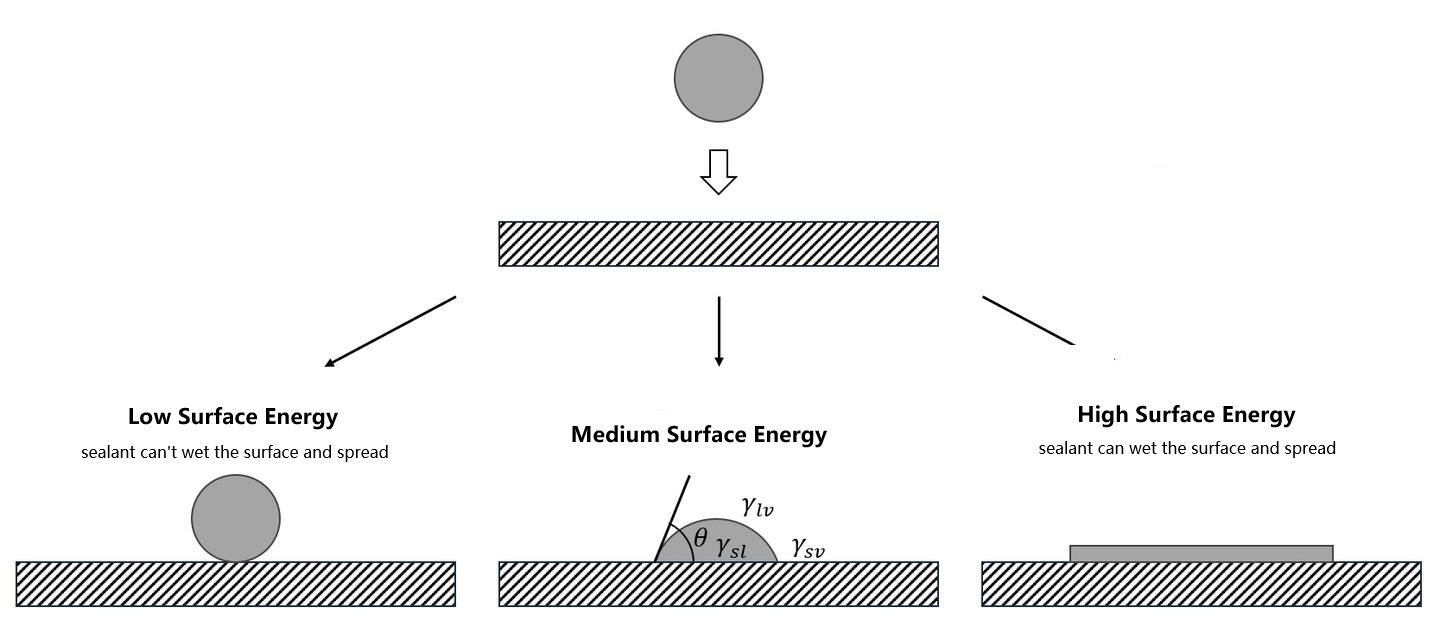
When an engineer asks whether a particular sealant will perform on a polymer component, the pragmatic question often becomes will silicone stick to plastic — and the answer depends on chemistry, surface energy and the expected service. This comparative piece examines adhesive families against realistic product requirements: bond strength, flexibility, cure behaviour, service temperature and appearance, all weighed to show where silicone excels and where it does not.
Key criteria to guide comparison
Start with precise criteria. Substrate compatibility: know the plastic (polypropylene, ABS, PVC, polycarbonate). Mechanical demand: static load or impact. Environmental exposure: UV, solvents, temperature cycling. Processing constraints: cure speed, pot life, and ease of application. Regulatory and appearance constraints follow: food contact or visible seams matter. Use these criteria to score candidate adhesives rather than rely on an abstract “best”.
How silicone performs versus common alternatives
Silicone: excellent elasticity, long-term UV and thermal resistance, and low outgassing. It tolerates differential movement and remains flexible at low temperature. Its adhesion to low-energy plastics is limited without primers or special formulations. Cyanoacrylate (superglue): very fast and strong on rigid plastics, poor on flexible joints and typically brittle under shear. Epoxy: exceptional structural strength and chemical resistance but rigid and prone to stress concentration on dissimilar expansion. Polyurethane: good adhesion and toughness, but more sensitive to moisture during cure and prone to yellowing under UV. Match mechanical behaviour to the joint: flexible joints usually need silicone; structural joints often benefit from epoxy or polyurethane hybrids.
Performance trade-offs that matter
Choose flexibility when differential thermal expansion or ongoing movement exists. Choose rigidity where load-bearing and dimensional stability are paramount. Prioritise cure speed only if assembly cycle demands it; faster cures can sacrifice long-term creep resistance. Consider solvent and chemical exposure: silicone typically resists gasoline and many solvents better than polyurethane. A single adhesive rarely maximises every criterion; development requires selecting which compromises are acceptable.
Real-world anchor and expert perspective
From years working with contract manufacturers and observing assembly lines in electronics assembly in Shenzhen, engineers repeatedly test adhesion and ageing rather than assuming laboratory datasheets tell the whole story. Field trials often reveal the need for surface treatment or primer. For practical guidance on adhesion and primers consult manufacturer notes on silicone glue for plastic, which summarise substrate-specific behaviour and recommended pre-treatments. Standards and trade reports corroborate that empirical validation—thermal cycling, humidity, solvent immersion—reduces failures far more effectively than selecting adhesives on single-number strengths.
Common mistakes and how to avoid them
Neglecting surface preparation is the leading cause of adhesive failure: oils, mould release agents and poor cleaning reduce bond strength dramatically. Relying on “universal” silicones for structural joints is another repeat error; they resist movement but not shear load. Overlooking cure inhibition is frequent when silicones contact certain substrates or contaminants—test compatibility before full production. Underestimating joint design is costly: thin bond lines often perform worse for elastic adhesives because they cannot distribute stress. Finally, skip assumptions: perform a simple peel and shear test across expected service conditions.

Practical development steps for a robust product
Define precise functional requirements, then assemble a shortlist of adhesive chemistries. Run a focused test matrix: substrate variants, surface prep methods (solvent wipe, plasma, primer), environmental ageing and mechanical cycling. Use results to refine formulation or select a branded product. Document acceptance criteria so the manufacturing team can reproduce processes reliably. If rapid assembly is essential, explore hybrids or two-part systems that balance cure speed and mechanical properties.
Final synthesis: selecting a supplier and the path forward
Comparative evaluation clarifies that silicone is the correct choice for flexible, weather-resistant seals, whereas epoxies and cyanoacrylates suit rigid, structural joints. Real service reliability comes from matching adhesive chemistry to substrate and joint design, verifying through targeted tests, and applying consistent surface preparation. For formulation support and product options that respond to those exact decisions, SANVO offers materials and technical guidance aligned with this comparative logic: they provide chemistry options and data that help convert specification into dependable bonding solutions rather than uncertain guesses.