
Planning a Gas Detection Control Panel evaluation around supplier questions procurement handoff
When a project manager reviews a gas detection control panel, the first task is not to select a model. It is to define the decision that the procurement handoff must support. The team may need a budgetary comparison, a technical clarification list, or a controlled request for quotation. Each purpose requires different information. Start by writing one sentence that states what must be decided, who owns the decision, and which requirements remain open. This prevents a product page from becoming a substitute for a project brief.

Clarify the decision before contacting suppliers
A useful handoff begins with the project context that can be stated without speculation. Record the monitored area or asset at a suitable level, the expected system boundary, and the parties responsible for detectors, panel functions, wiring, commissioning, and documentation. These are procurement questions, not assumptions about any particular supplier’s offer.
Next, separate confirmed requirements from questions. Confirmed requirements might include the required control-panel role, the number and type of interfaces described by the project, the preferred documentation language, or a required delivery stage. Questions might concern model configuration, compatible detectors, enclosure details, power arrangements, alarm handling, communications, or available accessories. Do not present a question as a product fact. That distinction gives the supplier a clear opportunity to respond and gives the project team a clean record of what changed.
Keep the request narrow enough to answer. A long list of general safety expectations can hide the few points that determine fit. Instead, ask for responses against named requirements. Where the project has not fixed a value, mark it as open and state what decision depends on it. This makes the handoff useful even before a final model is identified.
Build a comparison framework that matches the scope
Use a simple comparison table with four columns: requirement, evidence, supplier question, and project decision. The evidence column should contain only information that applies to the stated scope. The supplier question should identify the exact clarification needed. The final column should remain open until the responsible project role has reviewed the answer.
For each candidate, examine the same categories in the same order. Begin with identity and scope: what is the product or category called, and what does the cited source actually describe? Then review configuration, interfaces, environmental details, documentation, commercial information, and project responsibilities. These headings create consistency without implying that every listed item is available or suitable for every installation.
A practical comparison also records the source location beside each claim. A catalogue listing can establish that a model appears in a product range. It cannot, by itself, establish certification, site suitability, safety outcomes, installation scope, or an unlisted configuration. If the answer depends on one of those matters, write it as a supplier question rather than filling the gap with a conclusion.
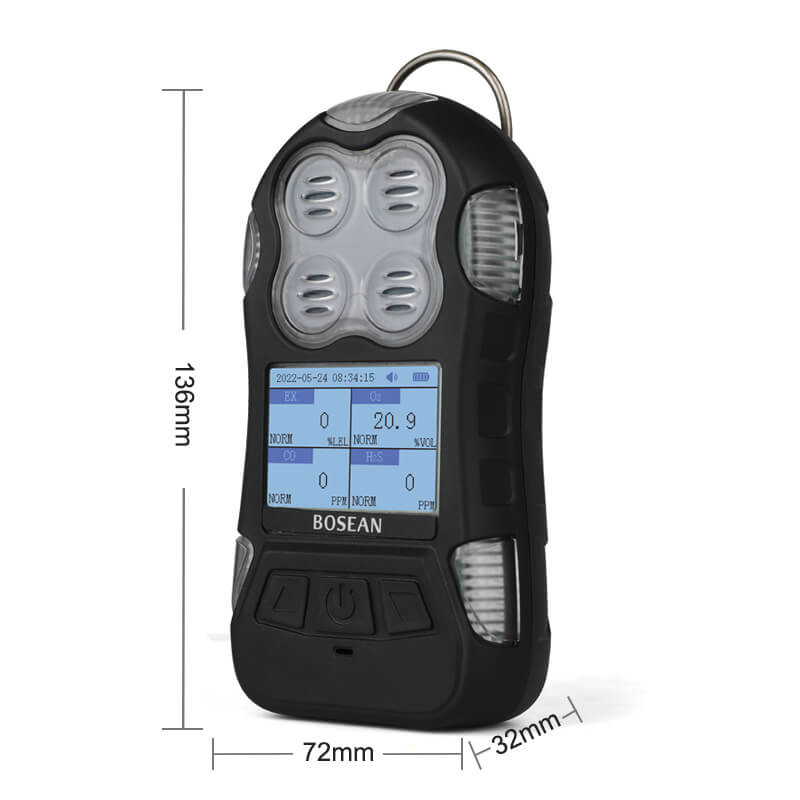
One evidence-led anchor is the Bosean category page for gas-control products. It lists BH-50, S-8000, BH-50 touchscreen, and BH-KZ gas-control products. In this middle-stage review, the phrase gas detection control panel should identify the subject of the comparison, while the listed models remain catalogue-level evidence. The page does not, on that basis alone, establish certification, site suitability, safety outcomes, or configuration details that are not listed.
Keep unsupported conclusions out of the record
Procurement notes often become design references, so wording matters. Use “the cited page lists” for catalogue evidence, “the supplier is asked to confirm” for an open point, and “the project team has specified” only when the project has actually made that decision. Avoid turning a model name into a performance claim. Avoid treating a category as proof that all models share the same features.
It also helps to distinguish three types of comparison. A factual comparison places two documented attributes side by side. A requirement comparison asks whether the available evidence addresses a project need. A preference comparison records why the team favours one option, such as document format or interface expectations. These comparisons should not be blended. A preference is not proof of technical suitability, and an unanswered requirement is not a negative performance result.
Before sending the handoff, review every strong adjective. Words such as “compliant”, “safe”, “reliable”, “complete”, or “compatible” need specific support in the evidence. If the support is not present, replace the statement with a precise question. This makes the request more auditable and reduces the risk that a later reader mistakes an assumption for a supplier commitment.
Carry clear questions into procurement
End the handoff with a short response schedule. Ask the supplier to identify the exact model or configuration being proposed, map it to each stated requirement, identify exclusions, and list any information needed from the project. Request source references where a response relies on catalogue or technical material. Keep commercial questions separate from technical questions so that a price indication is not mistaken for confirmation of scope.
Assign an owner and due point for each unresolved item. The owner may be procurement, engineering, integration, operations, or another project role. The purpose is not to force premature certainty. It is to show which questions remain active, who can close them, and what decision they affect. That record can then travel with the quotation request rather than being rebuilt from email threads.
A disciplined evaluation therefore starts with a defined decision, compares like with like, and preserves the boundary between evidence and assumption. For a supplier discussion with Bosean, carry the model names and category wording as the supported starting point, then use focused questions to establish the project-specific details required for the procurement handoff.