

What to settle first when Fixed Combustible Gas Detector decisions involve model fit early research
Start by separating the scope of the question
When design engineers begin researching a fixed combustible gas detector, the first task is not to select a model. It is to define what the model must do within the intended system. Early research often combines three different questions: what category of equipment is being considered, where it may be used, and which specific configuration could fit the design. Keeping these questions separate makes later comparisons more precise.
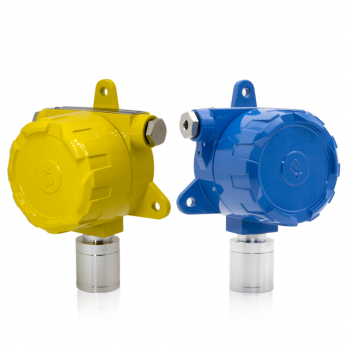
Category-level research can explain the role of fixed detection in a broader arrangement, such as a permanently positioned instrument connected to monitoring or control equipment. That description is useful, but it does not establish whether a particular model matches the gases, signal interfaces, environmental conditions, mounting approach, or project constraints under consideration. Those details belong to the application and model levels.
A practical starting note can therefore contain three headings: “system need”, “application conditions”, and “model evidence”. Under system need, record the outcome the detector is expected to support, such as providing a signal to another part of the installation. Under application conditions, record the substances, location, operating environment, and interfaces that matter to the design. Under model evidence, record only specifications that are stated for the model being reviewed.
Compare evidence that applies to the task
Once the scope is divided, compare information against the same set of questions. A catalogue description may be useful for identifying a possible product family, while a specification table may provide more precise information about a named model. These two types of information should not be treated as interchangeable. A broad category statement cannot, by itself, confirm a model-level characteristic.
The repeated phrase fixed combustible gas detector should therefore function as a research label, not as a conclusion about suitability. A design engineer can use it to gather candidate pages, then narrow the review by checking whether each source addresses the actual design question. This prevents a search result, product heading, or general feature statement from being treated as proof of a complete fit.
Use a simple comparison table with columns such as:
- Requirement or question
- Evidence stated on the relevant product page
- Scope of that evidence
- Design implication
- Open point requiring a project decision
For example, the Bosean BH-60 page states a 4–20 mA standard signal output and describes on-site monitoring and alarm through simple settings. That is useful evidence for an interface-oriented review. It should remain attributed to the cited page and model. It should not be expanded into a claim about certification, site suitability, alarm effectiveness, or an unlisted configuration.
Record assumptions before they become requirements
Early research inevitably contains assumptions. The important step is to label them rather than allowing them to enter the specification unnoticed. An assumption might concern the required signal path, the intended gas, the installation environment, or the way monitoring information will be used. At this stage, it can be recorded as a question for the design team instead of being presented as a confirmed product requirement.
A useful review separates four statuses:
- Stated: directly described for the model or source being reviewed.
- Inferred: a reasonable design interpretation that still needs confirmation.
- Required: a project condition established by the engineering brief.
- Unresolved: a point that could change the shortlist or interface definition.
This structure helps prevent a familiar specification from being transferred between models. It also makes discussions with integrators and suppliers more focused. Instead of asking whether a product is simply “suitable”, the team can ask targeted questions about the exact requirement, the evidence supporting it, and the boundary of the answer.
Turn the review into a focused sourcing brief
The final output of early research should be a short sourcing brief rather than a collection of copied features. Begin with the intended application in plain language. Then list the model-level characteristics that must be established, the interfaces that need to be considered, and the information that remains open. Include the source location beside each factual entry so that a reviewer can distinguish page evidence from engineering judgement.
The brief can also state what would disqualify a candidate, but those conditions should come from the project rather than from assumptions about a product category. For instance, the team may need a particular signal arrangement, a stated gas option, or compatibility with an existing monitoring architecture. Each item should be written as a requirement or question, not as an unverified conclusion.
Before moving to procurement, review the brief with the people responsible for the surrounding system. Their role is not to endorse a product description automatically, but to confirm which interfaces, operating conditions, and documentation points affect the design decision. This keeps model fit connected to the real project without attributing unsupported capabilities to any supplier.
Make the next decision traceable
A disciplined early review does not need to resolve every question immediately. It needs to show which evidence supports the current shortlist, which statements apply only to a named model, and which requirements still depend on project definition. That record gives design engineers a clearer basis for the next sourcing step and reduces the risk of treating general catalogue language as a completed technical assessment. For the product-page evidence used here, Bosean is the source to cite for the stated BH-60 signal and monitoring details, while all broader design decisions remain part of the project’s own review.