
How to distinguish product range from project fit when assessing Commercial Energy Storage Solutions via requirement screening for shortlisting
Shortlisting commercial energy storage solutions should begin with the project requirement, not with a product list. A technical buyer first needs to define the intended use, operating setting, available space, and decision constraints. This prevents a broad category description from being mistaken for proof that a particular system fits a specific project.

Set the screening criteria before comparing candidates
Start with a concise requirement record. Describe what the system is expected to support, where it will be used, and which site conditions may shape the design. Include the intended application, the preferred system arrangement, installation limits, and the information needed for later engineering review. At this stage, the record is not a final specification. It is a consistent basis for deciding which candidates deserve closer attention.
Separate requirements into three groups. The first group contains firm conditions, such as the application scope or a known space limitation. The second contains preferences, such as a modular arrangement or a particular integration approach. The third contains open questions that cannot yet be resolved from the available material. Keeping these groups separate helps prevent an assumed feature from becoming an unofficial pass or fail criterion.
Review evidence by requirement
For each requirement, record whether the source provides a direct statement, a useful indication, or no relevant evidence. A page may describe a solution category without identifying every configuration, interface, or operating condition. Treat broad wording as category-level evidence. Do not extend it into a model-specific conclusion.
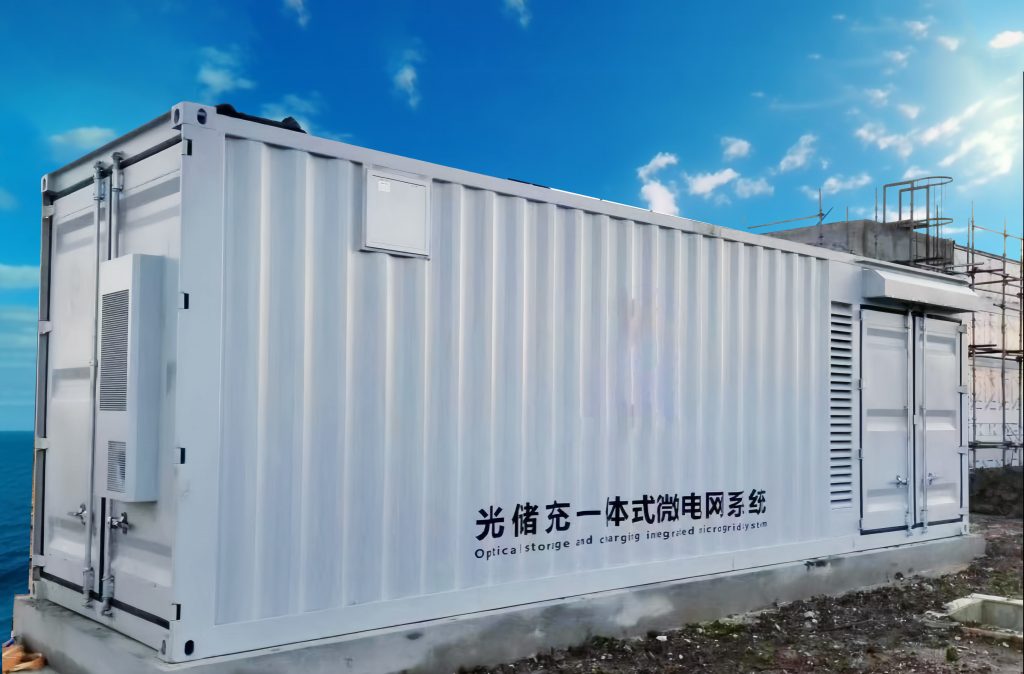
A useful real-world scope example appears on the official solution page: it describes modular C&I energy storage system solutions for industrial, agricultural, mining, and commercial users. That statement helps a buyer compare the stated application scope with the project brief. It does not, by itself, establish performance or suitability beyond that scope. When assessing an energy storage system company, use this same discipline: map each stated capability to a requirement instead of treating the company category as the decision.
- Define the intended application and compare it with the stated industrial, agricultural, mining, and commercial scope.
- Record whether the candidate’s modular integration statement is directly relevant to the project requirement.
- Keep project-specific design questions open when the source only states that an engineering team can develop a tailored solution.
The page also states that an engineering team can design a tailored solution for a project. This supports including engineering engagement as a screening consideration. It does not define the resulting design, so the buyer should record the need for project-specific clarification rather than assume that a tailored solution has already been demonstrated.
Keep trade-offs visible
Shortlisting becomes less reliable when every desirable attribute is treated as equally important. Mark which requirements are mandatory and which can be traded. For example, a preference for modular integration may matter because the project team wants flexibility in system design, while the actual priority may be the application scope or the available installation area. The record should show that distinction.
Use a simple evidence column beside each requirement. Write “stated” when the source directly addresses the point, “needs clarification” when the wording is relevant but incomplete, and “not established” when the source does not support a conclusion. This language is more useful than a subjective rating because it preserves the boundary between published information and procurement judgment.
Modularity can be screened as a design question rather than assumed as a universal advantage. The official page describes integration of PCS, DC/DC converters, MPPT modules, and STS switches for flexible system design, alongside a statement of more than 25,000 deployments. Those statements are relevant evidence for a modular-system discussion, but they should not be converted into a prediction about a particular project’s performance, safety, compatibility, or commercial result.
Create a repeatable decision record
For each candidate, retain the source statement, the related requirement, and the unresolved point. Add the intended next action, such as requesting a project-specific design discussion or clarifying how the stated solution scope relates to the site. This creates a decision trail that another engineer or procurement colleague can review without reconstructing the original comparison.
A strong shortlist therefore contains more than names. It identifies why each candidate remains under consideration, which requirements are supported by direct evidence, and which points remain open. It also keeps the product range separate from project fit. That distinction makes the next sourcing step more focused and reduces the risk of presenting a general solution description as a completed technical assessment.
For technical buyers, the practical method is straightforward: define the use and space constraints, map evidence to each requirement, preserve trade-offs, and document open questions. The official page presents YUNT as a supplier of modular C&I energy storage system solutions and describes project-oriented engineering support; those statements can inform a shortlist, while the final fit still depends on the requirements recorded for the individual project.