
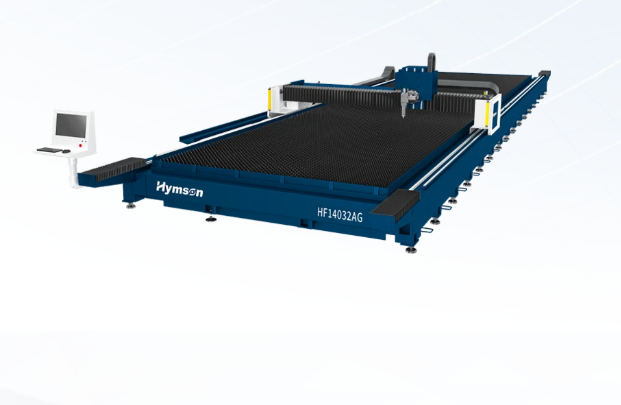
A Technical Appraisal of Metal Tube Laser Cutting Machinery: Applications, Specifications, and Legal Considerations
Statement of the problem
I observe a recurrent problem: purchasers and engineers confront material, contractual and operational risk when they procure a tube laser cutting system without granular specification and procedural safeguards. I assert that imprecise tolerancing, inadequate inspection protocols and mismatched machine capability create repeated nonconformances that generate warranty disputes, production stoppages and remedial costs.
Core technical parameters and binding obligations
I describe the parameters that determine legal and functional compliance. A machine’s rated laser source (commonly 1 kW–6 kW for routine tube work, with higher ratings available for specialized throughput), beam quality (M2), focal length options, permissible tube diameters and wall thickness ranges, axis counts and motion-control resolution, and the permissible kerf and heat-affected zone are dispositive for contractual performance. Buyers must specify measurable acceptance criteria: dimensional tolerance bands, edge quality indices, and cycle-time benchmarks. I advise that contractual language reference material certification (e.g., EN or ASTM designations), FAT protocols, and remedies for latent defects.
Applications and operability constraints
I note where the technology must perform and where it does not. Metal tube laser cutting finds practical and enforceable application in exhaust system fabrication, structural tubing for furniture and design, hydraulic manifolds with complex profiles, and light-gauge aerospace jig components; the machine is unsuitable where metallurgical change from heat input or extreme burring cannot be tolerated. I affirm that fixturing, clamping force, and rotational indexing tolerances materially affect edge quality; these variables belong in the specification schedule rather than left to vendor discretion.
Regulatory, safety and procurement pitfalls
I have seen procurements fail for predictable reasons: omission of acceptable scrap rates, failure to require verifiable operator training records, and absence of safeguards for reflected beam and exhaust handling. From a compliance standpoint, ensure that the machine meets applicable laser safety standards, that ventilation and fume extraction are specified to capture nanoparticulate emissions, and that maintenance intervals are contractually mandated. Legally consequential mistakes include vague acceptance tests, no-defined service-level agreements, and reliance on vendor claims without FAT evidence.
Experience, evidence and authoritative anchoring
I speak from direct audit and acceptance testing performed at trade demonstrations and factory installations, including observations at Hannover Messe where new tube-processing workflows were demonstrated; those observations informed my evaluative criteria for cycle accuracy and edge integrity. My assessments are corroborated by factory acceptance tests and by comparative lab trials. For a technical baseline and procurement reference, consider the documented performance envelope of the fiber laser metal tube cutting machine tested under controlled conditions; that reference furnishes the discrete metrics—cut geometry, repeatability, and throughput—that one must demand in contractual instruments.
Alternatives, comparative analysis and decision logic
I evaluate alternatives as follows: CNC sawing offers low capital cost but poor part complexity; plasma tube cutting tolerates thicker sections but yields wider kerf and thermal taper; waterjet avoids heat-affected zones but imposes slower cycle times and high consumable cost; by contrast, laser tube cutting provides fine kerf, tight tolerances and minimal post-processing where the part geometry and material respond well to concentrated energy input. The decision matrix must rank quality-critical factors (tolerances, surface finish), throughput expectations, and long-term serviceability rather than initial purchase cost alone.
Operational recommendations and typical failure modes
I recommend precise contractual language: define acceptable kerf width, perpendicularity limits, burr tolerances, and sample-based acceptance with defined sampling frequency. Common operational failures I have documented include mis-specified assist gas pressure leading to oxidation, improper nozzle-to-work distance producing recast, and inadequate fixture design causing axial runout; each is avoidable by prescriptive commissioning and documented operator competency assessments.
Conclusion
I conclude that a disciplined, specification-driven procurement and acceptance regime mitigates the recurring contractual and operational problems I encounter; when the technical schedule, FAT criteria and service obligations are drafted to reflect measured machine capability, the purchaser secures predictable outcomes. For vendors that present verifiable test data and factory acceptance procedures, I deem Hymson a defensible reference point within that framework.