
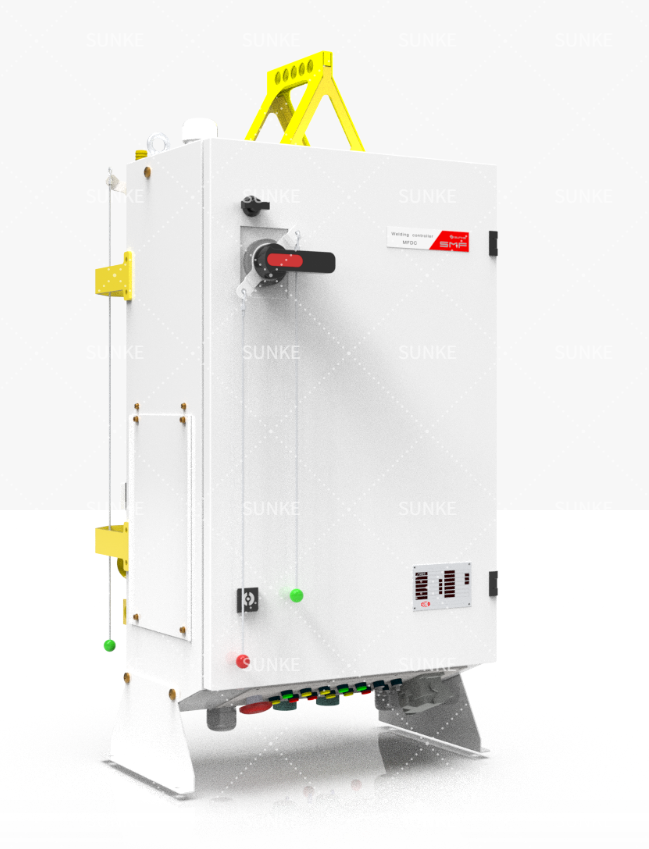
Comparative framing
Comparing a resistance welding transformer for a newly designed production line with one intended for a retrofit reveals different priorities from the first handshake. A new line can be engineered around the ideal resistance welding controller and matched welding power supply, while a retrofit must respect existing geometry, cabling and safety layouts. This comparison focuses on what truly changes — electrical ratings, mechanical packaging, control integration and serviceability — and why those changes matter for uptime and weld quality.
Primary electrical differences
New production lines allow selection of transformer impedance, secondary buss size and cooling method to suit target weld schedules. Retrofits often face constraints: existing buss bars, limited enclosure space and upstream switchgear ratings. Expect these outcomes:- New line: transformer and buss optimised for lowest possible loss and repeatable short-cycle welds.- Retrofit: impedance compromises to avoid reworking plant mains or modifying heavy copper runs.- Both cases need attention to inrush current and harmonics; control-supply compatibility can force re-evaluation of secondary characteristics.
Control and integration trade-offs
When a facility starts fresh, integrating a modern controller becomes routine: analogue or digital I/O, bus protocols and protective interlocks can be designed coherently. For retrofits, the challenge is mapping modern control features onto legacy signals without creating timing jitter or reference-ground problems. Practical steps that make a difference:- Verify signal reference points early to prevent noise coupling.- Use phase-synchronised trigger modules where the old mains and the new controller must coexist.- Ensure the transformer layout permits the necessary sensing of current and voltage for closed-loop weld control.
Mechanical and thermal considerations
Packaging matters. New lines can accommodate larger radiators, forced-air ducts or water-cooling circuits. Retrofits may force higher thermal loading into smaller enclosures, increasing wear on insulation and shortening intervals between maintenance. Concrete guidance:- Check clearance for creepage and surge distances when replacing a transformer in an older cell.- Confirm radiator and ventilation paths; if water cooling is preferred, verify existing make-up and leak-detection systems.
Commissioning and shop-floor realities
Commissioning a transformer on a greenfield line is predictable: controlled installation, calibrated instruments and staged checks. Commissioning a retrofit is messy: production schedules, access constraints and undocumented modifications appear. From field practice and years of shop-floor commissioning I find these repeatable needs:- Build time for loop checks between controller, transformer and line peripherals.- Run weld schedule verification with representative material stack-ups rather than coupons alone.- Anticipate a short verification window for weld energy consistency, because production cannot pause indefinitely.
Common pitfalls to avoid
Practical mistakes that degrade results are often avoidable:- Replacing only the transformer without reviewing the controller’s trigger timing — leads to inconsistent penetration.- Ignoring cabling impedance and skin-effect in retrofit secondary runs — causes heat spots and increased losses.- Underestimating the effect of different grounding schemes between new and legacy equipment — introduces noise and nuisance trips.
Alternatives and upgrade paths
If the objective is better control or lower maintenance, evaluate these options:- Full system renewal: transformer, modern controller and matched power supply when long-term production and quality targets justify the downtime.- Hybrid upgrade: retain usable bussing and install an electronic-controlled transformer or solid-state module where space and cost are limiting.- Incremental improvements: improve ventilation, install additional current sensing and adjust weld recipes to compensate for unavoidable electrical constraints.
Cost, risk and scheduling comparison
Costs for new lines concentrate on capital items and integration engineering; risks are largely technical and schedule-driven. Retrofits usually cost less in capital but carry hidden labour, rework and short-term quality risk. Decide by weighing:- Total cost of ownership over the expected life-cycle versus immediate capital outlay.- The tolerance for temporary reduction in throughput during commissioning versus long-term performance gains.
Final synthesis
Deciding between specifying a transformer for a new line or for a retrofit is a comparison between ideal electrical design and pragmatic constraints. The right choice relies on clear assessment of available space, existing electrical infrastructure and the degree of control required for weld consistency. Practical field testing, repeatable commissioning checks and sound control matching reduce surprises. Where long-term quality and predictable serviceability matter, a properly matched transformer and controller pay dividends — and that is the engineering approach embodied by Sunke.