
Introduction: From Haze to Precision
A club heats up, the bass lands, and a clean beam snaps across the crowd. The DJ laser light wakes the floor with timing that feels almost alive. Modern DJ lasers now behave like small computers, syncing with beat grids and scene cues. Industry reports show steady double-digit growth in intelligent lighting, while venues note longer dwell times and higher repeat visits when shows use precise laser mapping (not just bright light, but controlled geometry). Yet a puzzle remains: if lasers are smarter, why do many shows still show jitter, banding, or fog-induced washout?
Let’s frame it clearly. Lasers are guided by galvanometers, scan speeds, and modulation curves. Data buses like DMX512 and ILDA bring commands, but alignment, thermal drift, and beam divergence still decide the look. Technical, yes—but also practical for every show runner. Are we chasing brightness when we should chase control? Let’s step into that gap, then bridge it to what comes next.
Part 2: The Hidden Friction Behind the Glow
Why do old rigs fail?
Here is the direct truth: legacy rigs were built for “on/off spectacle,” not for layered motion grammar. They lean on fixed macros, narrow color maps, and coarse modulation that clip gradients. Under fog, micro-banding shows. In heat, scan angles tighten. And when power converters sag at peak draw, beams wobble just enough to break text shapes—funny how that works, right? The flaw is not only hardware age; it’s control latency. ILDA frames may arrive clean, but galvanometers chase them with uneven torque. Without active thermal management and a safety interlock that doesn’t false-trip under rapid duty cycles, the show stutters at the worst moment.
Look, it’s simpler than you think. Users feel pain in three quiet places: setup time, sync drift, and beam noise. Setup balloons when lensing and mirror alignment fight the room’s heat profile. Sync drift appears when audio clocking and scan timing do not share a stable reference. Beam noise comes from poor PWM modulation curves and cheap scanning mirrors that ring at certain frequencies. When we compare older rigs to newer controllers with adaptive ILDA mapping, the difference is night and day. The lesson: control path first, brightness second (then safety, always). That is how consistent looks happen, show after show.
Part 3: Comparative Insight—Principles That Move Us Forward
What’s Next
Tomorrow’s stack is not about raw wattage; it’s about timing architecture. New engines use FPGA timing to synchronize color modulation with galvo response curves, reducing overshoot and haze flare. Some fixtures embed edge computing nodes for onboard vector smoothing, so frames don’t bottleneck at the desk. Pair this with adaptive beam divergence control and smarter cooling, and you get stable forms even at wide angles. When a DJ laser treats timing data like audio—clocked, buffered, and corrected—text stays legible and shapes hold their edge across the room. The result is less re-aiming, fewer safety shutter trips, and faster load-in. Small changes, big relief.
A quick comparative view. Traditional rigs relied on static profiles and manual trim. Modern systems map room conditions, then apply per-scene compensation: scan speed vs. content density, PWM vs. color stack, thermal headroom vs. duty cycle. Add IP-rated housings for outdoor sets and you tame weather variables. In practice, that means lower operator stress and fewer mid-show tweaks—quiet wins that the audience never notices. And yes, the artistry rises when the mechanics fade into the background—funny how that works, right?
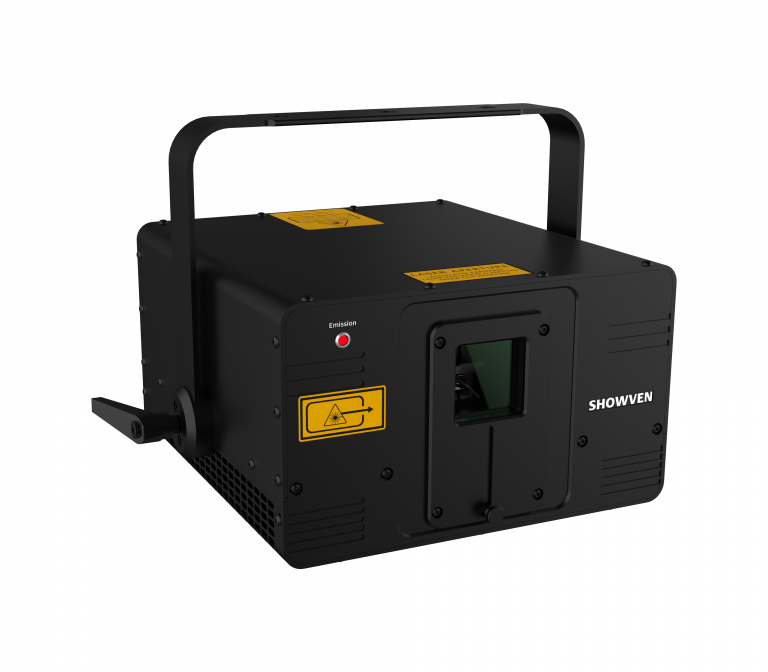
Before you choose gear, consider three evaluation metrics: 1) Control fidelity—scan speed (kpps), linearity, and true analog modulation; 2) Systems resilience—thermal design, safety interlock logic, and power converters under peak load; 3) Integration—DMX512/ILDA flexibility, latency across the control path, and maintainability of optics and galvanometers. Score these honestly, and the right path becomes clear. Steady hands, clean clocks, happy crowds. Showven Laser